When it comes to indoor cycling, one crucial aspect is knowing "what is the correct height for an exercise bike seat." Research indicates that incorrect seat height can lead to discomfort or injury. A report from the American College of Sports Medicine (ACSM) states that ensuring proper bike fit can enhance exercise efficacy by up to 20%.
Dr. Mark Smith, a renowned sports physiologist, emphasizes, “The right seat height significantly affects performance and comfort.” Proper adjustments can improve pedaling efficiency, allowing cyclists to fully engage their muscles. This translates to better workouts and reduced fatigue over time.
Many riders overlook this aspect, leading to suboptimal experiences. A seat positioned too high or too low can hinder movement and impact overall health. It’s essential to regularly reassess seat height to maintain an effective and enjoyable cycling routine. Understanding the right adjustments can transform your exercise routine and promote sustainable fitness habits.
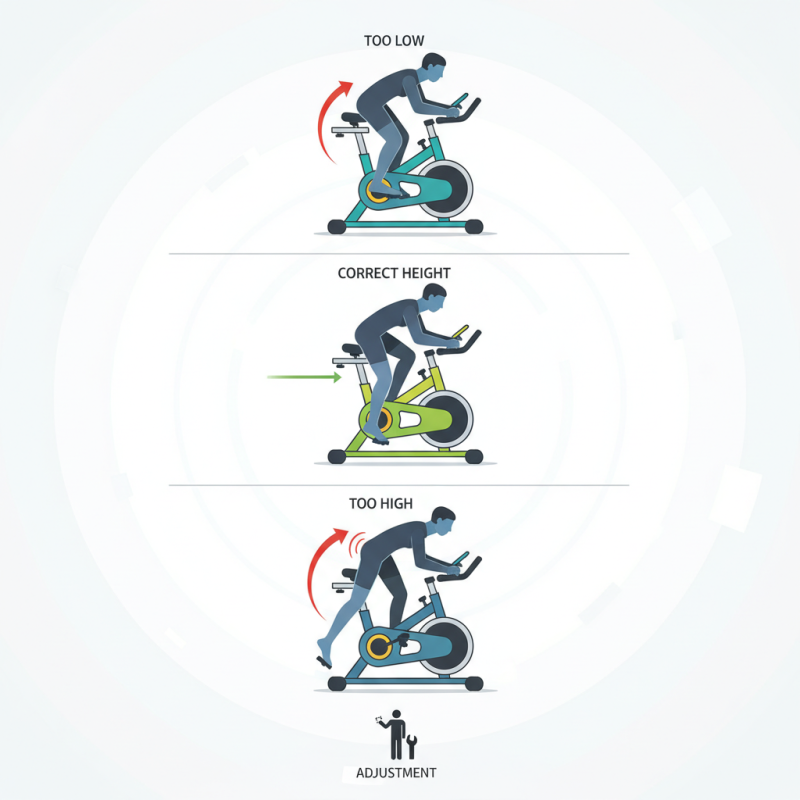
Setting the correct height of an exercise bike seat is crucial for effective workouts. Research from the American College of Sports Medicine indicates that improper seat height can lead to knee pain and inefficiency. A saddle that is too high causes overextension, while one that is too low can strain the knees. This means finding the sweet spot is essential for optimal performance.
It’s recommended that when seated, the pedal should be at its lowest position, allowing a slight bend in the knee. This setup maximizes power output and comfort. A study published in the Journal of Sports Sciences showed that cyclists with proper saddle height exhibited an average increase of 15% in cycling efficiency. However, many users still overlook this detail, leading to injuries and frustrations.
Regular evaluations of seat height are necessary. Body changes over time can affect the ideal height. It’s easy to assume the initial setup is still effective. Cycling is a low-impact exercise, but poor ergonomics can negate its benefits. Listening to your body is vital. Pain signals misalignment and a need for adjustment. A small change can yield significant results.
When setting the exercise bike seat height, consider your comfort and safety first. The right height can prevent injuries and enhance performance. Your leg should be almost straight when the pedal is at its lowest point. This helps in achieving an optimal range of motion without straining your knees.
One tip is to adjust the seat height based on your inseam measurement. Stand next to the bike and measure from the floor to your pelvic bone. This gives you a good starting point for adjustment. A common mistake is to make the seat too high, leading to discomfort during workouts. If you can't comfortably reach the pedals or feel pressure on your knees, re-evaluate the height.
Another aspect is the type of workout you intend to do. For endurance rides, the seat might be higher to reduce pressure on the knees during long pedaling sessions. Conversely, if you're doing interval training, a slightly lower seat can promote better push-off and power. Always listen to your body. If you experience pain, it’s worth slowing down and adjusting your setup.
Finding the correct height for your exercise bike seat is essential for optimal performance and comfort. Start by standing next to the bike. The seat should be level with your hip bone. This initial measure helps ensure your knees won't strain during workouts. Sit on the bike and ensure that your knee aligns over your foot when the pedal is at the lowest point. Adjust the seat up or down to achieve this position.
Next, pedal at a steady pace and pay attention to your knees. They should only have a slight bend when fully extended. If your knees feel tight or start to hurt, it’s a sign you need to make adjustments. Remember, the position needs to feel right to you. What feels comfortable for one person may not for another.
Periodically reassess your seat height. As you grow stronger, your needs may change. Don’t assume your original settings are perfect forever. Keeping your seat at the right height improves your effectiveness and reduces injury risk. Use these steps to find your ideal setup, and adjust as needed.
When adjusting the height of your exercise bike seat, common mistakes can lead to discomfort or even injury. Many cyclists overlook the importance of proper alignment. A study by the Journal of Sports Medicine found that nearly 65% of cyclists experience knee pain attributed to incorrect seat height. Ensuring your seat allows for a slight bend in the knee at the lowest pedal point can mitigate this risk.
Another frequent error is failing to account for body proportions. Cyclists may assume that one height fits all. However, research from the American College of Sports Medicine emphasizes the necessity of personalized adjustments. Your inseam measurement should guide your seat height. If the seat is too high or too low, it may result in strained hips or lower back pain—a reality many overlook.
Some riders rush their adjustments, leading to an ineffective setup. Taking the time to fine-tune the seat can dramatically enhance performance. A quick fix may seem convenient, yet inadequate adjustments can ruin your experience. It’s vital to test the height with a steady pedal stroke, ensuring it feels right before committing to a workout. Don't ignore these details; they hold the key to a smoother ride and better results.
| Tip Number | Tip Description | Common Mistake |
|---|---|---|
| 1 | Adjust the seat height based on your leg length. | Not measuring leg length before adjustment. |
| 2 | Ensure your knee is slightly bent at the bottom of the pedal stroke. | Setting seat too high, causing leg strain. |
| 3 | Keep the seat level; avoid tilting. | Tilting the seat forward or backward. |
| 4 | Test the height by pedaling for a short duration. | Not testing before a long workout. |
| 5 | Adjust for comfort after a workout. | Neglecting to adjust after experiencing discomfort. |
| 6 | Check seat adjustment periodically. | Ignoring changes in bicycle setup. |
| 7 | Align seat height with hip level. | Setting too low, affecting posture. |
| 8 | Seek professional help if uncertain. | Making adjustments without guidance. |
| 9 | Ensure the seat is securely locked in place. | Not checking seat stability. |
| 10 | Adjust the handlebar height for comfort as well. | Focusing only on the seat height adjustment. |
Finding the correct height for your exercise bike seat is crucial for comfort and efficiency. A report from the American College of Sports Medicine highlights that improper seat height can lead to discomfort and injuries, making proper adjustment essential. To test and confirm the right seat height, start by sitting on the bike. Your leg should be fully extended at the bottom of the pedal stroke, with only a slight bend in your knee.
A common method involves positioning the seat so that your hip remains level when the pedal is at its lowest point. An ideal setup may have the seat height around 25 to 30% of your inseam length. Many users overlook fine-tuning this measurement, which can compromise performance. Some athletes feel discomfort yet continue training, resulting in poor alignment and fatigue.
Regularly reassess your seat height, especially after prolonged usage or weight changes, to maintain optimal efficiency during workouts.
: Proper seat height prevents knee pain and improves cycling efficiency.
When seated, your knee should have a slight bend at the pedal's lowest point.
A high seat can cause overextension and lead to discomfort while pedaling.
A low seat may strain the knees and reduce workout efficiency.
Regular evaluations are necessary, as body changes can impact ideal height.
Comfort, safety, and the type of workout you plan to do are key factors.
Setting the seat too high can result in pressure on the knees.
Measure from the floor to your pelvic bone to find a good starting point.
Pain can signal misalignment, so it's wise to adjust the setup.
A higher seat may help during endurance rides, while a lower seat aids interval training.
Setting the correct height for an exercise bike seat is crucial for both comfort and performance during workouts. A well-adjusted seat can prevent injuries and ensure that you engage the right muscles effectively. When determining what is the correct height for an exercise bike seat, various factors come into play, including your height, leg length, and riding style.
To achieve the optimal seat position, follow a step-by-step guide that involves measuring your inseam and adjusting the seat height accordingly. It’s also important to be aware of common mistakes, such as setting the seat too high or too low, which can lead to discomfort or strain. Finally, testing and confirming the correct seat height is essential for ensuring a comfortable riding experience, enabling you to enjoy your workouts and maximize your exercise efforts.

Carpe fitness